Modern ADHD Treatment Planning (2025 Edition)
By Dr. Douglas Cowan, Psy.D.
Marriage and Family Therapist
ADHD affects nearly 10% of children and 5% of adults—and despite decades of research, many treatment plans remain stuck in a 1990s-era mindset: diagnose, medicate, and move on. But ADHD is a dynamic neurodevelopmental condition, and treatment in 2025 should reflect that. This guide outlines a modern, neuroscience-informed approach to treating ADHD in children, teens, and adults.
1. Start with Comprehensive Assessment
A modern plan begins with a full cognitive and behavioral assessment. Creyos Cognitive Assessments evaluate 12 brain domains, including working memory, inhibition, attention, planning, and reasoning. Self-report inventories like the ASRS, GAD-7, and PHQ-9 help assess emotional regulation, anxiety, and executive dysfunction. Creyos also has developed specific assessments just for ADHD.
2. Understand the Subtype
Treatment should be tailored to the ADHD presentation. Common subtypes include:
· Inattentive (Pooh Type): Distracted, forgetful, disorganized
· Hyperactive/Impulsive (Tigger Type): Energetic, impulsive, inconsistent
· Over-Focused (Rabbit Type): Rigid, perfectionistic, anxious
· Depressive (Eeyore Type): Low energy, disengaged, procrastinates
· Anxious (Piglet Type): Fearful, overly cautious, worries excessively
3. Core Treatment Components
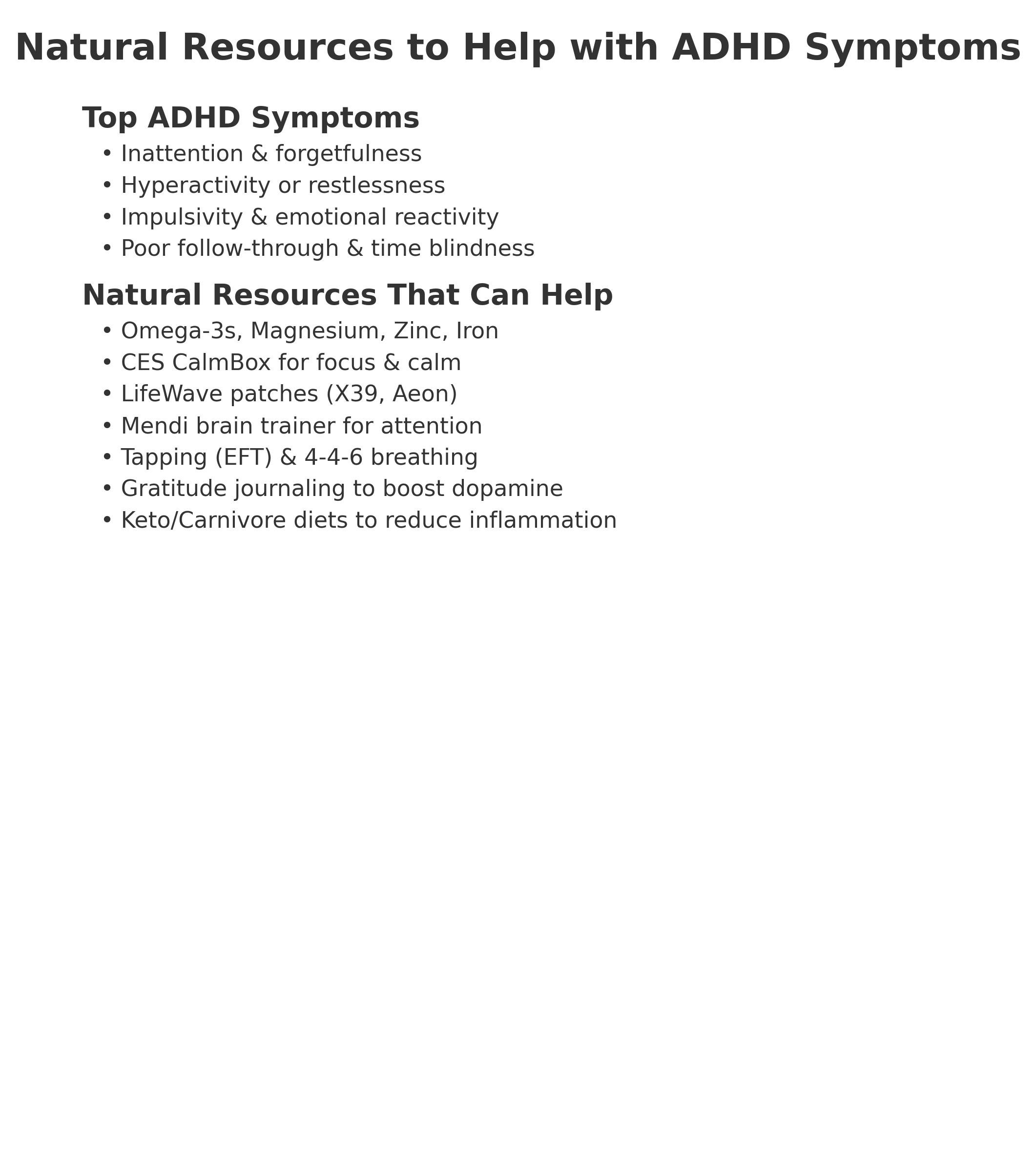
Cranial Electrotherapy Stimulation (CES CalmBox)
CES is one of the most underutilized tools in modern ADHD treatment. It is a “neuro-modulation” technology. Research from the past decade—including clinical trials, military studies, and neurofeedback integration—shows CES can improve attention, reduce anxiety, and restore neural timing. A 20-minute CES session has been shown to significantly improve continuous performance task (CPT) scores in individuals with ADHD.
Recommended Use:
· 20–30 minutes daily
· Use during reading, homework, or calm routines
· Safe for children, teens, and adults
LifeWave Patch Protocols
These phototherapy patches stimulate acupuncture points using light and can be combined to target neuroinflammation, energy, and emotional regulation. These are “bio-modulation” technologies.
Core Patch Stack:
· X39 (daily): Stem cell activation, cognitive repair, brain balancing
· Aeon (daily): Reduce stress, calm nervous system
· Carnosine (night or performance boost): For memory, oxidative protection, neuro-protective
Optional Add-Ons:
· Alavida (evening): Sleep regulation
· Energy Enhancer (AM use): Support morning focus and energy throughout the day
Usage: Patches worn 12 hours on / 12 hours off. Rotate placement sites daily.
Dual-N-Back Cognitive Training
Dual-N-Back training is one of the few cognitive tools shown to improve working memory and fluid intelligence. This simple brain game helps with focus, task switching, and executive endurance. A free app to download.
Recommended Use:
· 10–15 minutes/day, 5 days/week
· Use apps like 'Brain Workshop', 'IQ Boost', or web-based versions
4. Nutrition and Movement
Diets high in sugar and processed carbs worsen ADHD symptoms. Begin with a protein-rich breakfast and avoid dyes or additives. Eat as clean as possible. If there are any words on the Ingredients List on your package of foods that you cannot pronounce – do not eat them.
· Emphasize omega-3s, magnesium, B-complex, clean hydration
· Use exercise daily to enhance dopamine and neuroplasticity
5. Protocol Variations by ADHD Subtype
· Inattentive (Pooh): X39 + Aeon daily, add Dual-N-Back. CES recommended during work periods.
· Hyperactive/Impulsive (Tigger): Emphasize CES, X39 and Aeon to calm reactivity. Avoid overstimulation. Use timers and visual cues.
· Over-Focused (Rabbit): Combine CES + mindfulness. Use Dual-N-Back and flexible routines to reduce rigidity. X39 and Aeon.
· Depressive (Eeyore): X39 + Carnosine, perhaps Energy Enhancers, motivational coaching, structured daily rituals. CES can support emotional regulation and is FDA approved for the treatment of different types of depression.
· Anxious (Piglet): CES + X39 and Aeon patch daily, calming tea, slow transitions. Dual-N-Back after CES to build working memory. The CalmBox is FDA approved for the clinical treatment of anxiety and insomnia.
Final Thoughts
Any type of Neurofeedback technology is helpful for any form of ADHD. Tradition forms of Neurofeedback help the client to learn to self-regulate and focus. Direct Neurofeedback, or Low Energy Neurofeedback (LENS) accomplish the same treatment goals but in half the time. Tools like the MENDI.io are other forms of neurofeedback that can be used at home and get good results.
ADHD is treatable—not just with medication, but through a multidimensional plan that enhances brain function, reduces overwhelm, and builds confidence. This 2025 approach reflects what neuroscience, biofeedback, and nutritional psychiatry have confirmed: ADHD is a brain-based condition that benefits from targeted, personalized intervention strategies.
· Disclaimer: This content is for educational purposes only and does not replace clinical diagnosis or medical advice. Please consult your healthcare provider before starting any new treatment.*