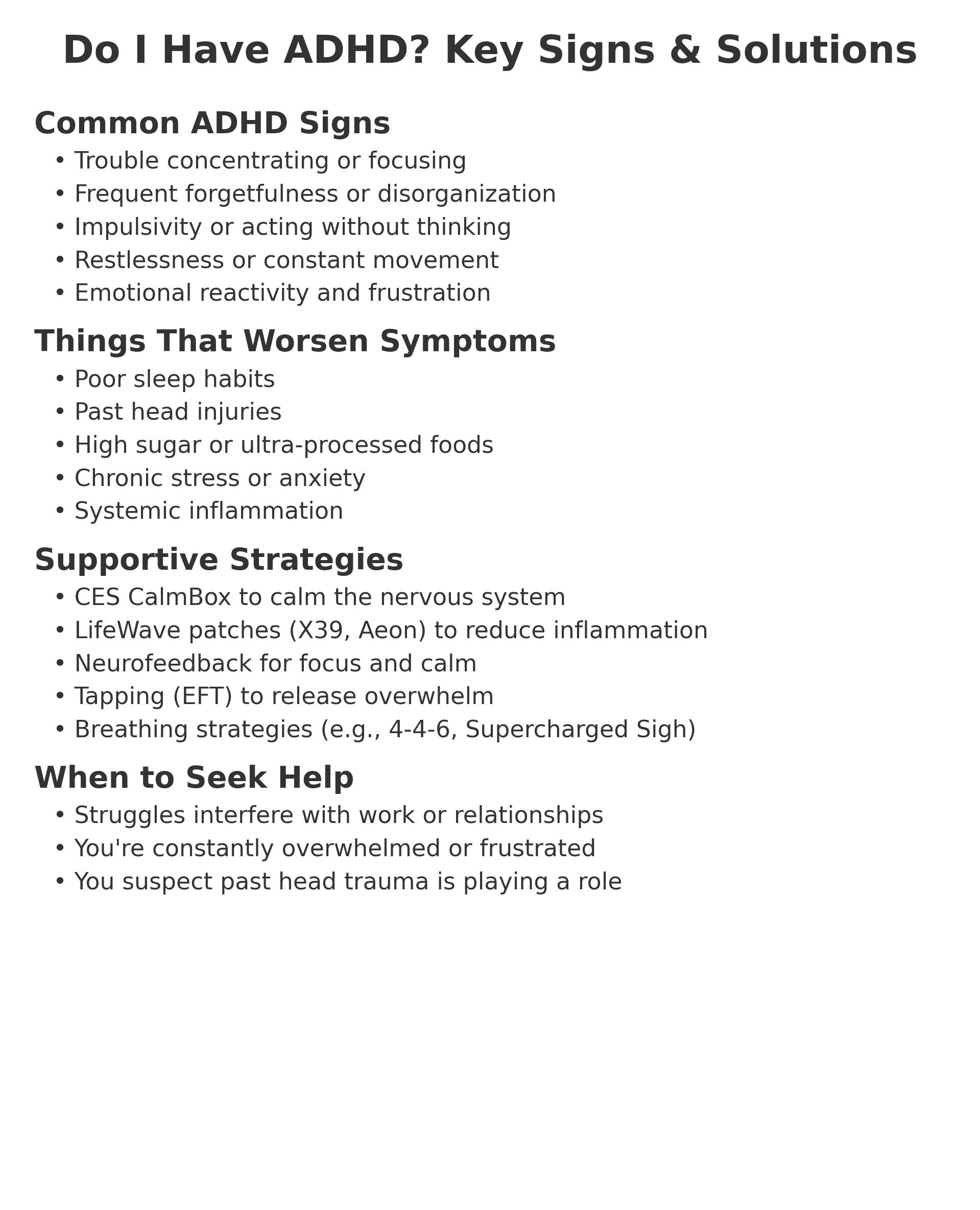
How Do I Know if I Have ADHD?
Have you ever found yourself wondering, 'Do I have ADHD?' If so, you’re not alone. Millions of people—both children and adults—ask themselves this same question every year. And for good reason: ADHD (AttentionDeficit/Hyperactivity Disorder) can be easy to miss, especially when symptoms are subtle, misunderstood, or masked by stress, anxiety, or fatigue.
Understanding the Problem
ADHD isn’t just a childhood disorder marked by bouncing off the walls. It’s a complex neurological condition that affects attention, focus, memory, emotional regulation, and impulse control. It presents differently in children than it does in adults—and often goes undiagnosed for years, especially in women and high functioning individuals.
Common Symptoms of ADHD
Here are some of the most common symptoms of ADHD in adults and children:
Difficulty concentrating or sustaining attention
Frequently forgetting tasks or losing things
Feeling overwhelmed by simple decisions
Trouble finishing projects or following instructions Impulsivity—interrupting, blurting, or making quick decisions
Restlessness, fidgeting, or a sense of being constantly 'on'
Emotional dysregulation—frequent frustration or mood swings
What ADHD Looks Like in Adults
In adults, ADHD might not look like hyperactivity. Instead, it may appear as chronic disorganization, a racing mind, trouble finishing tasks, or even emotional exhaustion from masking symptoms. Adults with ADHD often report feeling like they have to work twice as hard just to keep up.
Questions to Ask Yourself
Do you frequently miss deadlines or appointments, despite good intentions?
Are you constantly battling clutter, both physically and mentally?
Do you start projects with excitement but struggle to finish them?
Have people close to you said you seem ‘scattered’ or ‘distracted’?
Have you ever felt like your brain works differently, or like you’re always one step behind?
How Is ADHD Diagnosed?
Getting an accurate diagnosis starts with a comprehensive evaluation. This may include clinical interviews, self report questionnaires, school or workplace history, and often a cognitive performance test. Creyos cognitive assessments, for example, can highlight patterns such as impaired working memory, slow processing speed, and reaction time irregularities that are common in ADHD. We offer this assessment to our clients.
Don’t Overlook These Contributing Factors
ADHD symptoms can be worsened—or even mimicked—by several underlying conditions. It’s important to explore:
Past head injuries or concussions
Chronic stress or trauma
Sleep deprivation
Systemic inflammation (often tied to poor diet or gut health)
What Can You Do About It?
Here are some proven, science backed interventions you can explore:
LifeWave X39 and Aeon patches: These noninvasive phototherapy patches may help reduce systemic inflammation, support brain healing, and improve focus by optimizing energy production at the cellular level.
CES CalmBox technology: Cranial Electrotherapy Stimulation has been shown to support better attention, improved sleep, and anxiety reduction—three huge areas of concern for people with ADHD.
Neurofeedback (especially Direct Neurofeedback): Helps retrain the brain for better regulation, focus, and calmness. Can be especially useful if trauma or head injury is part of your history.
Tapping (EFT – Emotional Freedom Technique): A body to brain approach that reduces anxiety and helps regulate emotional outbursts or overwhelm. Great for both kids and adults.
Breathing strategies: Simple but powerful. Try the 'Supercharged Sigh' or 446 breathing pattern to shift into a calmer, more focused state within minutes.
Clean eating and hydration: Reduce sugar and ultra processed carbs. Add omega3s, protein, magnesium, and plenty of water to support brain performance.
When to Seek Professional Support
If your symptoms are interfering with work, relationships, parenting, or self esteem, it’s time to get support. A licensed therapist, clinical psychologist, or psychiatrist can guide you through diagnosis and treatment.
You’re Not Alone—and There Are Solutions
Living with untreated ADHD can feel overwhelming—but there’s a path forward. With the right insights, tools, and support, you can gain clarity, increase focus, and reduce the frustration that comes with feeling like your brain is working against you. Explore options like neurofeedback, CES, LifeWave, and body based tools that regulate your nervous system gently and effectively.